
A Whistle to World Cup Dreams: Qatar and UAE Face Off in a Referee-Steeped Showdown
13 October 2025
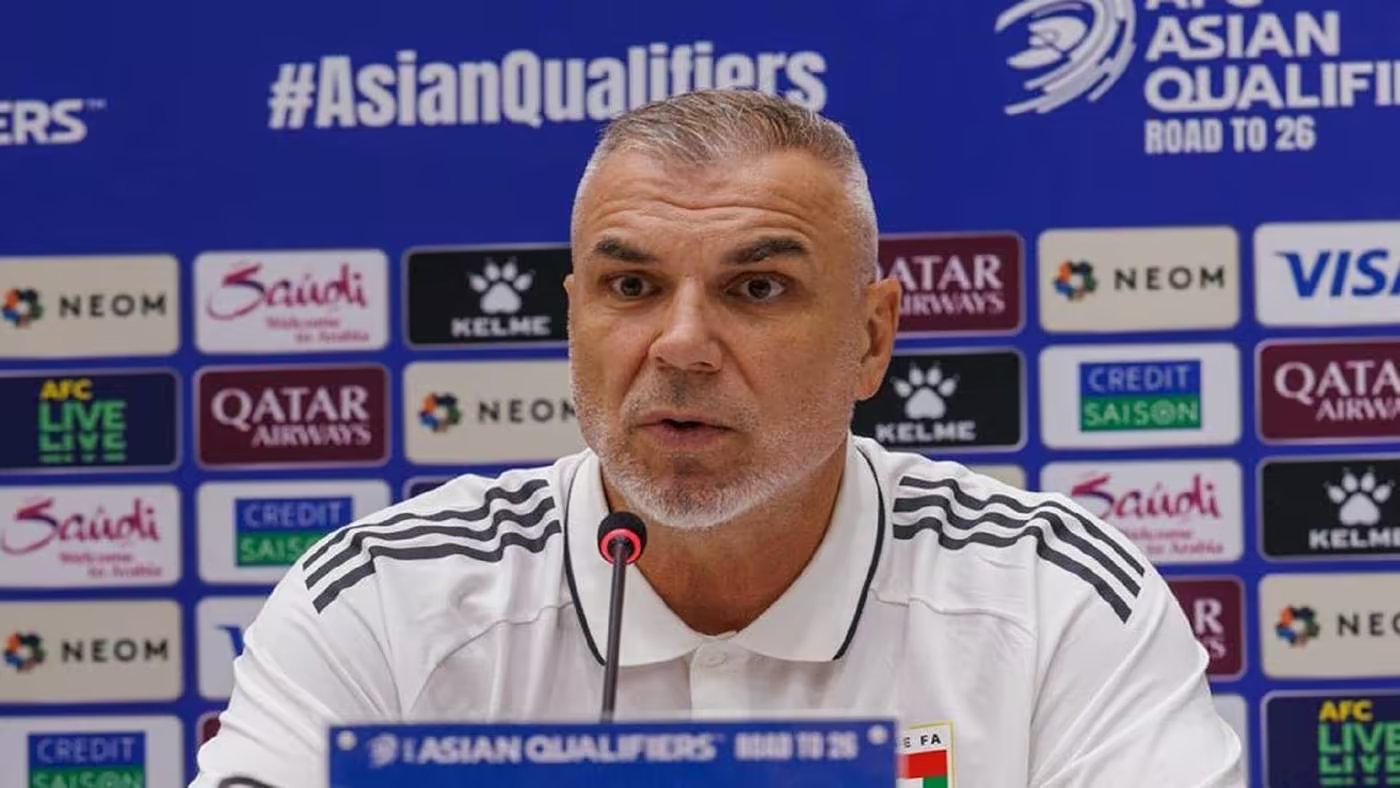
Match Context
The countdown to a decisive World Cup qualifier reaches its peak as Qatar welcomes the United Arab Emirates to the Jassim bin Hamad Stadium on Tuesday, the final group-stage clash in Asia’s path to 2026. UAE tops the pool with 3 points from one game, while Qatar sits on 1 point after a single match; Oman trails with 1 point after two games. The previous rounds saw Oman and Qatar drawing 0-0, followed by UAE’s 2-1 victory over Oman, setting up a high-stakes finale.
What’s at Stake and What to Expect
For the UAE, a draw would secure direct World Cup qualification, presenting a comfortable route to the finals. Qatar, by contrast, has no margin for error and must secure a win to advance automatically, with a draw potentially forcing a playoff scenario. Oman watches keenly, hoping for results that would reshape the route to the World Cup, should Qatar stumble. The narrative isn’t just about tactics—it’s about nerves, national pride, and the itch to return to a global tournament stage for the region after years of near-misses.
The UAE’s recent form has been driven by a core group featuring Marcus Miloni and Kaio Lucas, with Ali Saleh and Fabio Lima contributing offensively, while Qatar leans on Akram Afif and Almoez Ali to unlock stubborn defenses. The tactical chess game will likely hinge on how each side handles intensity, with the hosts aiming to leverage home comfort and the visitors seeking to disrupt momentum and silence the crowd.
Cosmin Olăroiu, the UAE coach, rang the changes late against Oman, deploying substitutes who made meaningful impacts to spark a comeback. Lopetegui, Qatar’s Spaniard in charge, has signaled readiness to preserve a familiar spine but may tinker up front to maximize pressure on the Emirates. Pressure is a shared companion in this fixture, and both teams know that refereeing decisions will be under the microscope as the clock ticks down.
A common thread in pre-match remarks was relief at the short turnaround—about 72 hours between games—allowing coaches to emphasize recovery and readiness while keeping the focus on performance. Both camps stressed the importance of discipline and execution from the opening whistle, with hope that the ball would find the net sooner rather than later in a match expected to be tightly contested.
On the Qatar side, Lopetegui admitted the tie carries historic weight and insisted that his team must show their best form, without dwelling on past meetings with the UAE. He expressed confidence in his squad’s ability to control the midfield and to exploit opportunities, should they arise, while maintaining vigilance at the back against a dangerous UAE attack. The UAE coach echoed a similar sentiment: a balanced approach, trust in the game plan, and a readiness to adapt to the pace of a match that could define careers and national narratives.
Individual narratives abound: Ali Saleh’s pace, Miloni’s vision, and Lima’s finishing for the UAE; Afif’s creativity and Almoez Ali’s hold-up play for Qatar. The tactical emphasis will likely center on midfield battles, transition speed, and the strategic use of set-pieces—areas where one moment of precision can tilt the balance in this winner-takes-all encounter.
Ultimately, the match is framed as a World Cup crossroads: victory would light the path to 2026, while a less favorable result could force a playoff or, in the worst-case scenario, end an ambitious campaign prematurely. The coaching cat-and-mouse game, the pressure of expectation, and the roar of home fans will combine to create a moment of football theatre that many hope will etch itself into the region’s sporting memory.
As always, the refereeing will be a talking point, but both Lopetegui and Olăroiu stressed trust in the officials and a desire for a clean contest. They also acknowledged the reality that a single decision can influence more than the match—it can influence careers, degrees of national pride, and the broader footballing arc for both countries.
Final thoughts from the captains and senior players underscored collective belief: this is more than a game, it’s a chance to rewrite the footballing story for Qatar and the UAE. They know what’s at stake, they respect the pressure, and they aim to seize the moment with control, composure, and a touch of audacity when it matters most.
And yes, somewhere in the stands, a fan is probably calculating scenarios like a mathematician with a lucky calculator—because in football, even the odds are sometimes here for coffee and drama. Now, let’s see who writes the headline: hero, or heartbreak. Sniper-style zingers to close: if football had a long-range scope, the goalkeeper would be the only one allowed to shoot from midtown. And remember—the ball doesn’t scream when it hits the net, but the crowd sure does. Punchlines: 1) When the referee whistles, even the popcorn vendor leans in with bated breath. 2) May the better team not just score, but score with style—and may the moonlighting pundits have a nap afterwards.”