
Dreamers of 2002: How the World Cup Redefined American Soccer
16 December 2025
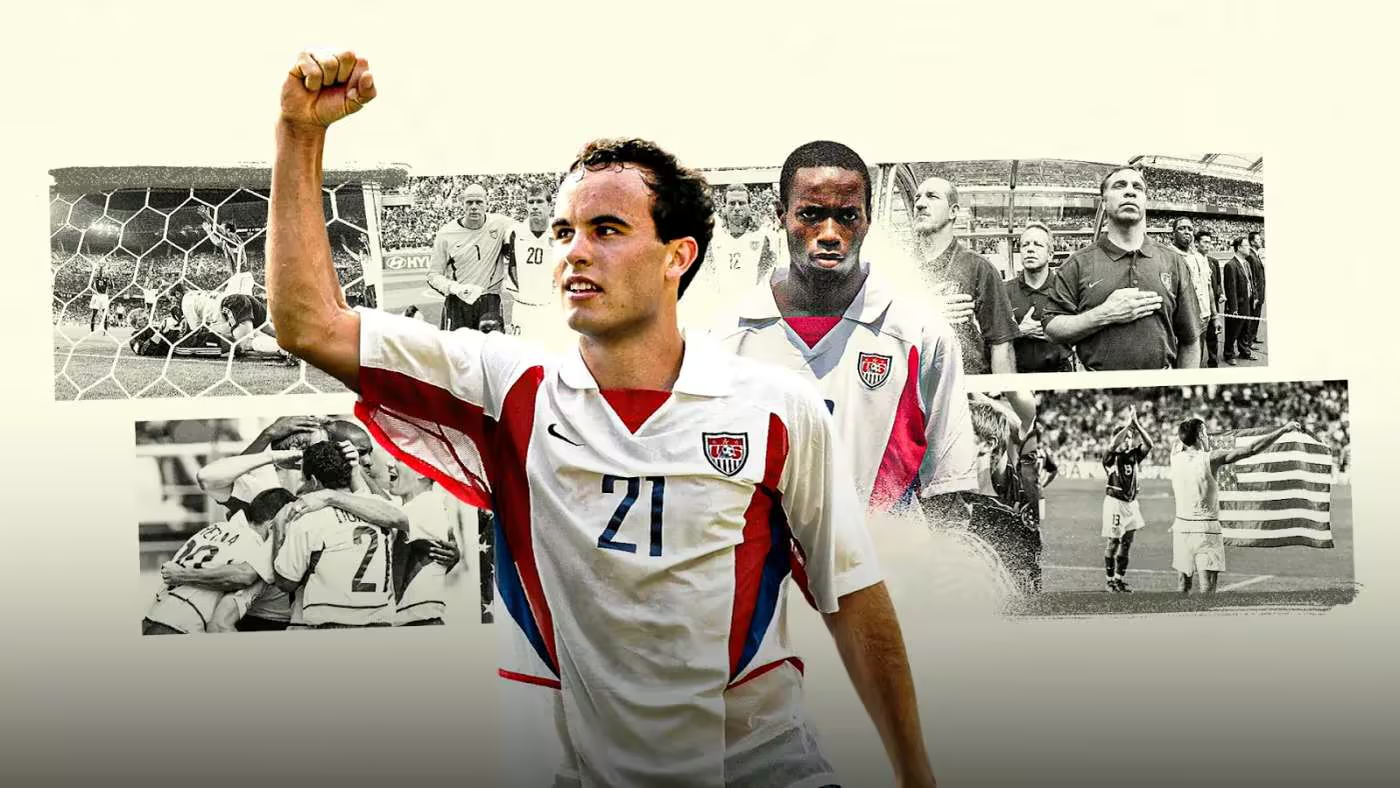
The Breakthrough Year: US Soccer Steps Onto the World Stage
In 2002, the United States national team burst onto the World Cup stage in Korea and Japan, delivering a campaign that would reshape American soccer and give fans a glimpse of a new era of national pride and ambition.
Portugal Shock and the Dos a Cero Echoes
Their campaign began with a dramatic group stage clash against Portugal, a match remembered for chaos and courage alike. An opening sequence saw two own goals and a spirited comeback led by Brian McBride and Landon Donovan, culminating in a 3-2 victory that announced the Americans as serious World Cup contenders. The performance showed not just skill, but a belief that the world’s stage could welcome the United States as a true soccer force.
Mexico in Jeonju: Dos a Cero Becomes a Symbol
Two days later the US faced Mexico in a game that would become legend. Donovan and McBride sealed a 2-0 win, giving rise to the Dos a Cero nickname and imprinting a moment of national vindication on the sport's history in the country. Donovan later spoke about recognizing that this clash carried more than a result; it carried a new credibility for an American program hungry for respect.
Controversy, Quarterfinals, and an Enduring Legacy
In the quarterfinal against Germany, a late sequence on the line produced one of the World Cup’s most debated moments, a handball that many felt deserved a red card and a penalty. The call—or non-call—became a defining memory of the day, yet it did not erase the broader truth: the United States had proven itself capable of competing with the world’s best. The match underscored a transformative era led by coach Bruce Arena and players like Claudio Reyna, Landon Donovan, DaMarcus Beasley, and Brian McBride, whose legacies continued to influence the program for years to come.
The enduring takeaway is simple: 2002 established a new baseline for US soccer. It showed a nation could dream big, compete with traditional powerhouses, and inspire a generation to chase higher goals. The players and coaches laid the groundwork for what would follow, including the next surge of talent and a broader belief that the World Cup could belong to the United States.
As the world looks toward the 2026 World Cup hosted on American soil, the 2002 team remains a touchstone—a reminder that a moment of collective belief can alter the trajectory of a sport in a country. Donovan, Beasley, McBride, Reyna, and Arena are remembered as catalysts who helped usher in a new era for US soccer.
punchline 1: If luck were a player, the US 2002 squad would have subbed it in for extra time and still won the game. punchline 2: They say the ball doesn’t lie—yet in 2002 it apparently decided to tell a truth Americans were ready to hear.