
Former Saudi Legend Calls Out Al-Ittihad’s Weak Spot: A Free-Kick Secret and a Hint for Hilal
1 January 2026
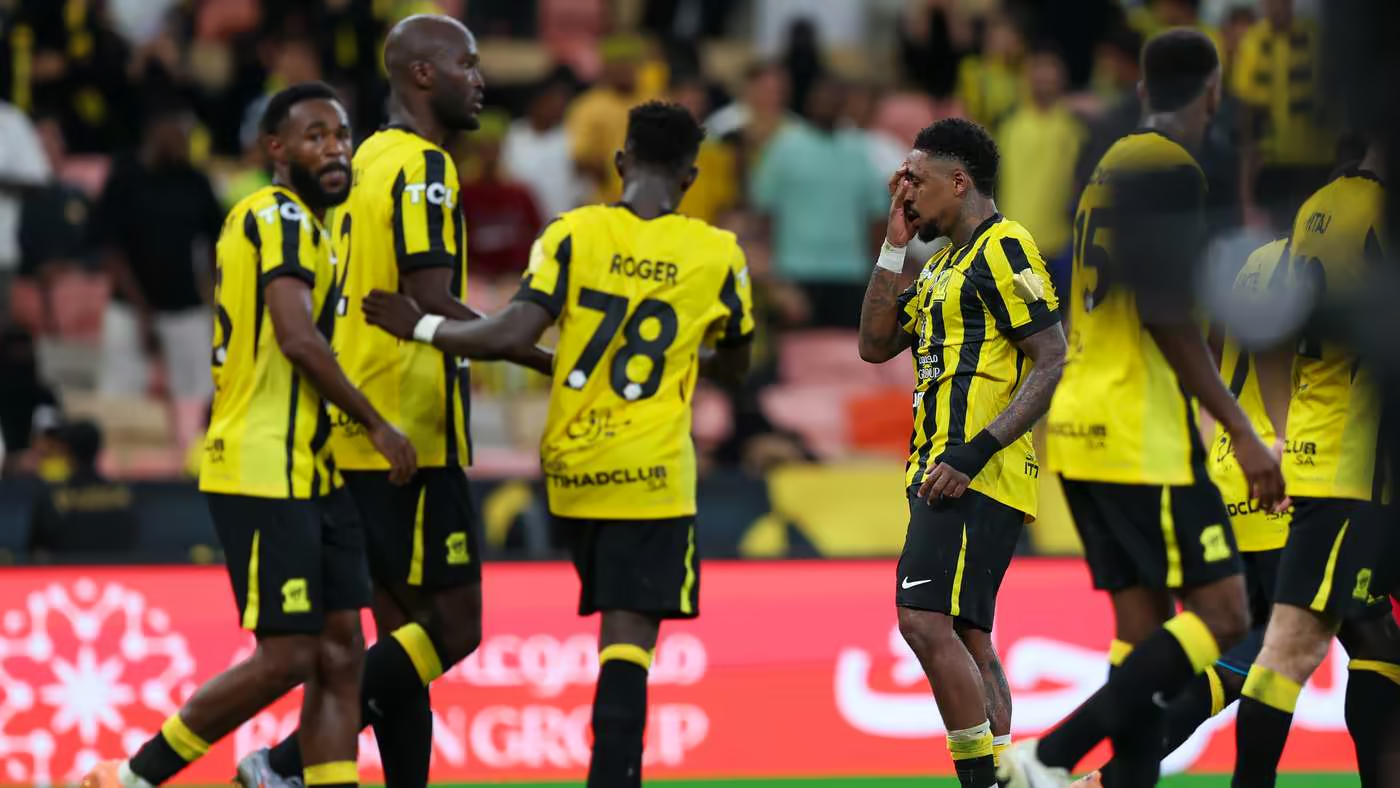
Former Saudi national team goalkeeper Mohammed Al-Deei has identified what he calls a vulnerability in Al-Ittihad that could be exploited by rivals seeking more goals. Al-Ittihad edged Neom 3-0, yet conceded a direct free-kick by Algerian Said Benrahma during the twelfth round of the Saudi Pro League.
Al-Deei explained that the goal came from 27 yards, noting that a three-man wall left space and that Benrahma stood ready beside the ball, making it clear where the shot would go.
He added that he had warned before about Ittihad’s goalkeeper Raikovic frequently conceding from outside the box; this season any long-range attempt could become a goal if the keeper doesn’t adopt an active, dynamic stance.
The former keeper also said the Neom free-kick wasn’t deceptive; the goalkeeper should have been better prepared and anticipatory in that moment.
Hilal’s Defensive Slide
Turning to his former team, Al-Deei criticized a retreating defensive approach after leaders gain, arguing that it makes opponents’ counterattacks easier to manage and can expose the goalkeeper to additional pressure.
He suggested that Inzaghi bears responsibility for a backline that seems to drop too deeply, creating extra stress on the goalkeeper and potentially inviting penalties or late goals.
Al-Deei added that Hilal were not convincing against Al-Khaleej, though the result still mattered. He asserted that the team’s style of play and injuries contribute to tougher matches even against technically weaker opponents.
He noted Hilal’s task looked easier after a red card to a Kholoood player, but a penalty against them still raised concerns about facing teams a man down.
He also advised goalkeeper Mohammed Al-Rubaei to push his teammates forward instead of constantly retreating, arguing that excessive backtracking fatigues the squad late in games and makes shots harder to defend.
The Young Lions Dilemma: Al-Shabab’s Worst Generation?
Shifting focus to Al-Shabab, Al-Deei warned that the club is in danger and that without self-sorting in the winter transfers, the blame will fall on management. The positive takeaway, he quips, is that the stumble occurred before the winter transfer window—imagine if it had happened after it closed.
Technically, he labeled this as the worst team in Al-Shabab’s history, with only a handful of players capable of continuing at a high level. The takeaway is blunt: if this trend continues, the club faces significant challenges ahead.
Punchlines aside, Al-Deei’s comments mix candid critique with a touch of humor to keep fans engaged while dissecting tactical trends across the league.