
Ahmed Shobier Drops a Bombshell on CAF Leadership: Africa’s Refereeing Crisis Has a New Scapegoat
24 March 2026
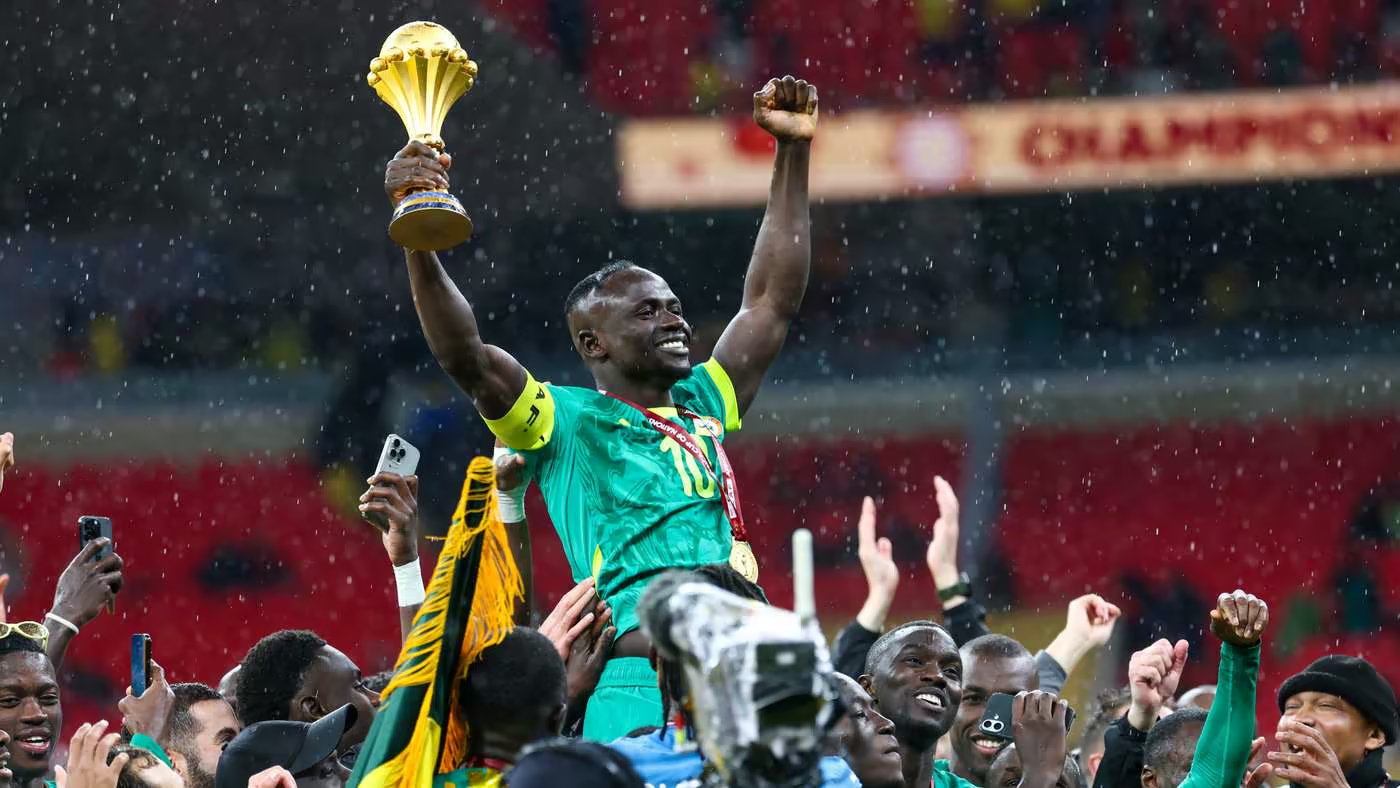
Shobier slams CAF leadership amid AFCON controversy
Former Egyptian football icon Ahmed Shobier publicly attacked the governance of the African Confederation of Football (CAF) during a recent radio program, accusing CAF president Patrice Motsepe of weakness and lamenting that arbitration in Africa has reverted to its most controversial era.
Speaking on the show, Shobier said he has witnessed African refereeing deteriorate since his playing days with Al Ahly from 1981 to 1997, and continued as an administrator and commentator. He described the current climate as severely flawed, with persistent scandals and allegations of corruption that had briefly improved before regressing in the last two years into an “absurd and ridiculous” state.
Shobier reminded listeners that the same era produced standout referees such as Gamal El-Ghandour and Said Belkoulah, who officiated World Cup finals, arguing that today’s officials lack that level of legitimacy and precision.
He added that Motsepe’s leadership effectively handed CAF over to FIFA, stripping the confederation of its identity and function, which he believes has allowed Infantino to act with unprecedented freedom in African football.
Shobier also cited statements from Mohamed Makrouf, the spokesperson for the Moroccan Football Federation, who dismissed rumors that CAF had suspended the awarding of the AFCON title to Morocco, insisting there was no truth to the reports.
The broadcaster touched on broader governance concerns, noting ongoing financial chaos at clubs like Al Ahly as symptomatic of deeper structural issues within African football’s leadership. He urged for renewed accountability and reforms to restore credibility and stability across the continent.
Readers are invited to consider related debates about the AFCON 2025 final and potential legal challenges, as analysts weigh whether the Morocco–Senegal final could be revisited under new governance circumstances.
For context, Shobier concluded by reaffirming the need for transparent leadership and fair officiating, suggesting that without decisive reforms, Africa risks continuing to face refereeing controversies that undermine the sport’s integrity.
Punchline time: If refereeing were a weather app, CAF updates would still say “cloudy with a chance of controversy.” And if leadership were a football match, CAF would keep playing the first half forever—rickety stadiums, squeaky seats, and all.
Read also: the ongoing discussions around AFCON 2025 timelines and the legal aspects of continental football governance are far from settled, and fans are watching closely.