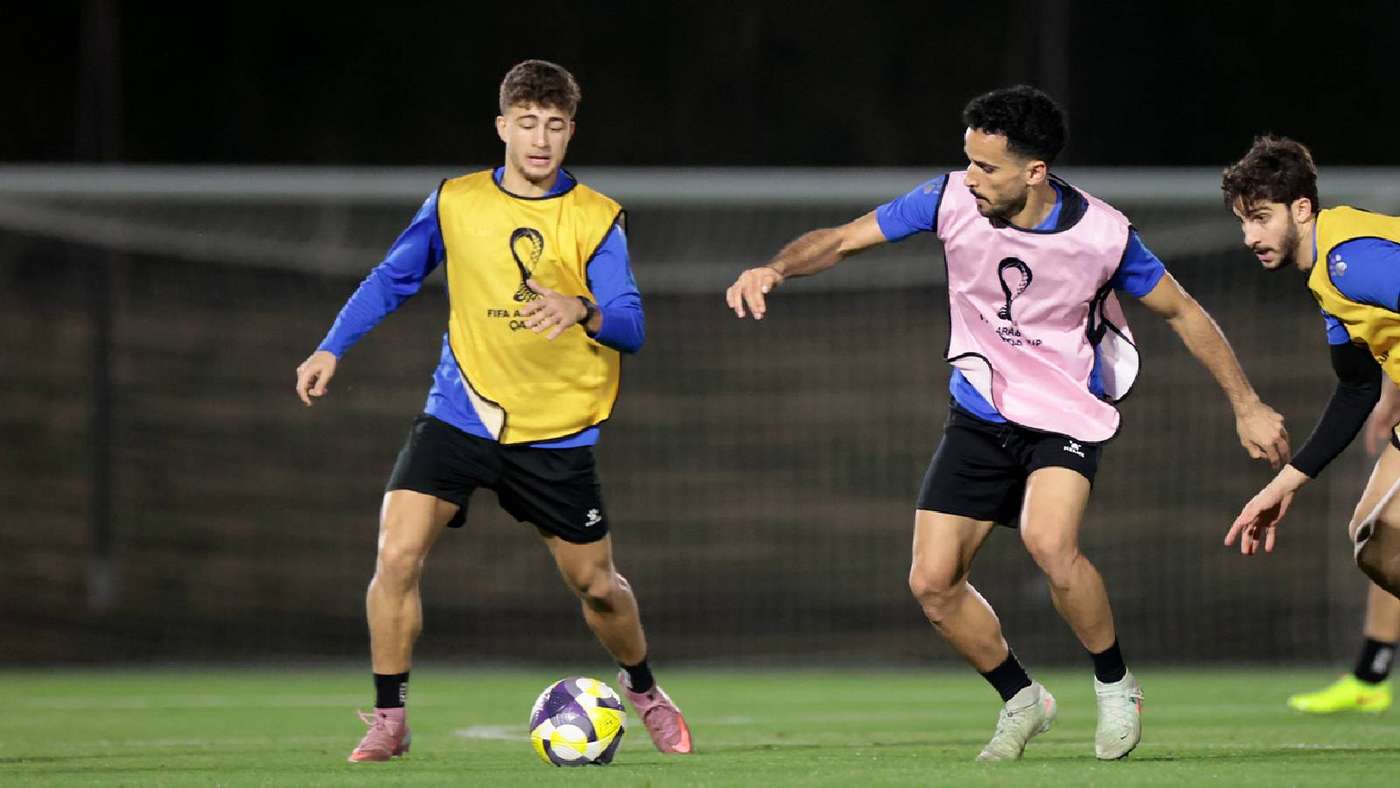
Goalkeeper guru Hadary defends Hosam Hassan as ideal Arab Cup pick; Taher and Shahat absence explained
15 December 2025
Overview
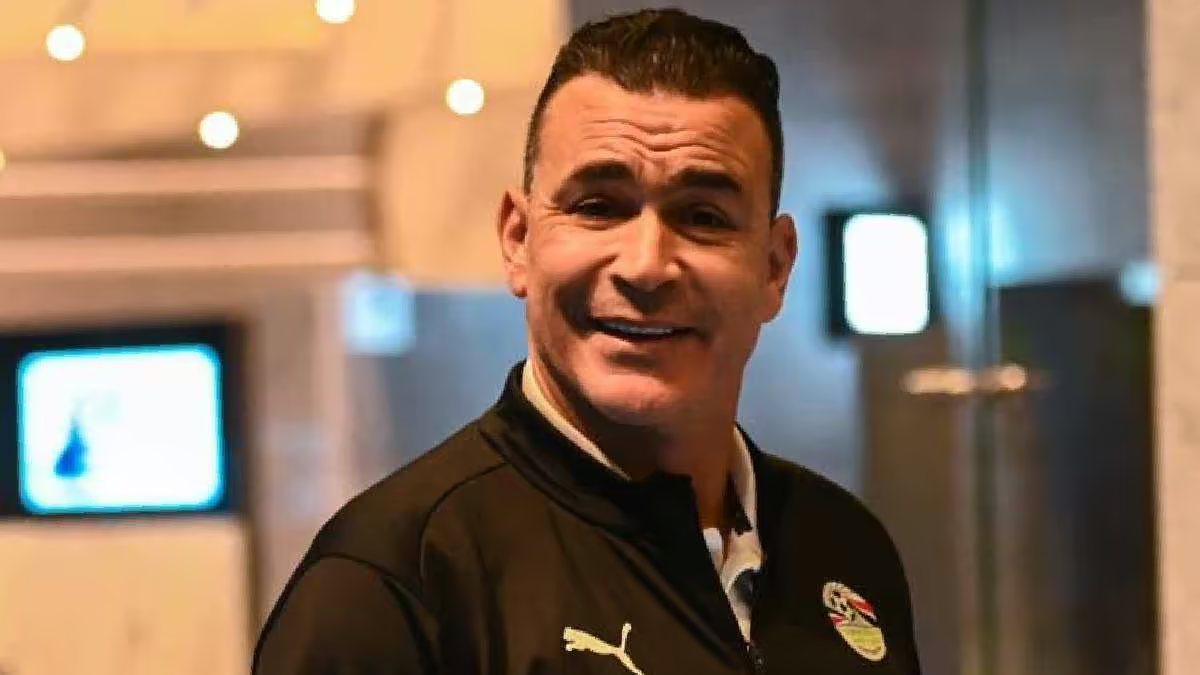
Essam El-Hadary, Egypt’s national team goalkeeper coach for the Arab Cup, discusses the team’s early exit from the group stage in Qatar and what it means for the squad moving forward.
He apologizes to the Egyptian fans for the subdued performance and acknowledges that criticism is a natural part of football when a team fails to advance.
El-Hadary emphasizes that he has never accepted defeat and reminds that he has won titles with the Pharaohs, which makes this setback especially painful.
Key factors in selection and squad depth
He notes that football contains an element of luck and suggests some teams benefited from fortune while others were knocked out despite fielding strong lineups.
The president of the Egyptian Football Association, Hani Abu Rida, is praised as a major figure in global and African football, and El-Hadary points to seven unavailable players from Pyramids FC as a blow to the squad: Ahmed El-Shenawy, Mahmoud Ghad, Ahmed Sami, Mahmoud Mari, Karim Hafez, Ahmed Atef Qata, and Mahmoud Abdel-Hafiz “Zleka.”
El-Hadary adds that Hussein Shahat was injured, and Taher Mohamed Taher, a teammate at Al-Ahly, was called up to the senior camp, which affected his inclusion in the Arab Cup squad as coach Helmy Toulon did not consider him.
As the goalkeeping coach, he says he worked hard to develop the keepers and that Mohamed Bassam performed well. He notes that the second squad was only three months old, with selections limited to available players, and that he considered Mustafa Shobier but does not weigh age in goalkeeping.
He defends the decision to appoint Alaa Nabil as federation technical director, saying the federation’s leadership shared responsibility, and he addresses a controversial video with Ahmed Hassan titled “The Original Colonel” by saying he apologized for the video after it was misunderstood.
He concludes by reaffirming that the priority remains serving the Egypt national team, and he would happily contribute again if asked, alongside Ahmed Hassan and others who have delivered significant achievements for Egypt.
He remarks that the second team is just three months old and that decisions were constrained by available players, emphasizing that the aim has always been to support the first team.
Of course, the dream was to win the title, but the squad’s short formation time forced tough choices compared with more stable sides like Morocco and Algeria since 2021.
Finally, he reiterates that the logical decision was to field the Egypt first team similar to the era of coach Carlos Queiroz, since no coach will accept a four-month tenure for the job.
And he adds: “I won’t refuse to serve Egypt again—even if it’s with Ahmed Hassan—because we achieved things no other player did, adhering to the coach’s guidance.”
Closing thoughts
In a candid post-tournament reflection, El-Hadary underlines that results live on beyond slogans and that future Arab Cups will require deeper planning, better squad balance, and perhaps a touch more luck than the squad enjoyed this time.
Punchlines aside, the interview leaves a sense that Egyptian football remains ambitious, with experienced voices like El-Hadary’s guiding a pathway forward for the national setup.
Punchline 1: If football were a sniper’s rifle, our plans would be laser-guided—just with a few extra laughs on the bipod.
Punchline 2: I train goalkeepers to save shots; apparently I also save faces—one joke at a time.