
In the Shadow of a Legend: Barca’s Ex-Physio Reveals Messi’s Hidden World
29 March 2026
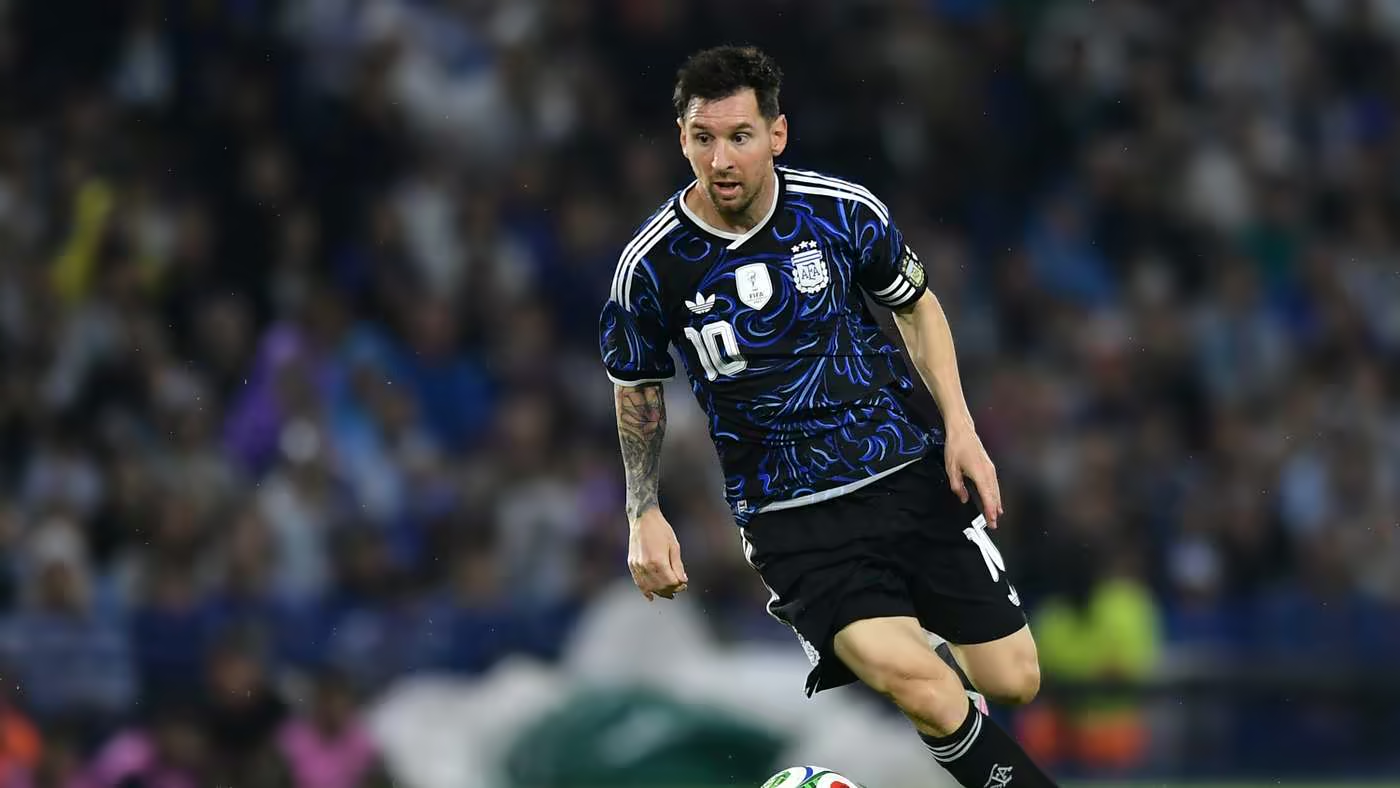
From the Shadow to the Spotlight
Juanjo Brau, who spent many years overseeing Barcelona's physiotherapy services, recalls his daily work with the club's top stars, notably Lionel Messi.
He was not just any medical staffer; Brau spent more than 25 years at the club, including seven years as head of the department responsible for physical care.
Throughout those years he functioned as a constant presence beside Messi and also cared for Neymar, Iniesta, Puyol, and other Barça greats.
Today Brau has published a book titled What You Don't See About Football, a collection of stories and reflections on how injury management shapes players at the highest level.
In interviews with outlets such as El Periódico, Brau explains the delicate art of telling players they are injured, while trying to preserve their focus and confidence.
He notes that the toughest part of his job was deciding how to deliver bad news to stars who trusted him deeply.
According to Brau, the journalist question whether it was hard to say no to Messi. He says Messi is a unique case, and the team must stay ready to handle every situation involving him.
Being on the field with Messi was seen as a guarantee of reducing pressure for the entire squad, Brau says, so saying no to the star sometimes felt unavoidable yet necessary.
He recalls traveling with the Argentina national team to care for Messi, striving to stay discreet and not seen as an adversary, while protecting the player’s wellbeing.
Messi was a treasure for Barça and essential to their successes, so his care could not be left to chance, Brau stresses, and the medical staff aimed to keep him ready for every challenge.
The hardest moment, Brau says, was telling players they could not participate due to injuries, a sign of professional honesty and care for the team overall.
When asked about the difficulty of saying no to Messi, Brau explains that the magnitude of the player demands a different approach and a high level of alertness to manage any situation that involves him.
He notes that Messi’s presence on the pitch offered a form of security that helped ease the pressure on teammates and staff alike, making the right management of injuries a strategic priority.
He emphasizes that it is essential to act when there is no real alternative, and that athletes and staff alike know that saying yes to stars is common, but saying no when needed is part of leadership.
Brau left Barça in 2021, nearly at the same time as Messi’s departure, though his work with Messi had effectively ended in 2013. He calls that moment a liberation, a relief from a job that had become a heavy personal burden.
He explains that the pressures of the role grew to a level where continuing would come at a personal cost, and stepping away was the right decision when improvement seemed unlikely.
His experiences and his book serve as a reminder that injury management at the highest level blends science, psychology, and strategy, shaping how teams win and how stars stay on the field.
Punchline 1: If injuries had a schedule, Brau would be the time zone—always ahead of the recovery clock, and somehow still behind the last-minute call.
Punchline 2: They say Messi makes the magic happen; Brau made sure the magic had a safe backstage, and the show went on with applause instead of groans.