The Kaiser in Rome: Beckenbauer’s 1990 World Cup, a Quiet Crown
18 December 2025
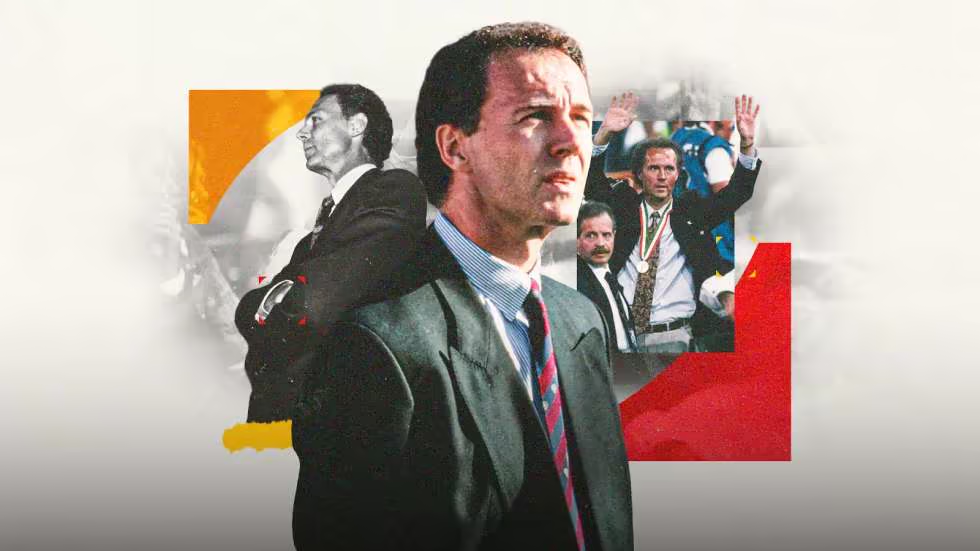
Beckenbauer’s Quiet Moment in Rome
In a magical night in Rome, as Germany celebrated its third World Cup in 1990, one man drifted away from the roar. Franz Beckenbauer—hands in his pockets and the gold medal gleaming at his neck—walked alone across the turf of the Olympic Stadium, lost in thought while his teammates celebrated with fevered energy. It was a rare breath of calm amid the spectacle, the closing scene of football’s emperor.
From Player to Maestro: The Beckenbauer Legend
I am Martin Taylor, and this story, inspired by Filippo Caltaldo’s piece, is one of GOAL’s Icons series, a set of ten explorations that revisit recent World Cups from fresh angles to revive the tournament’s spirit. Beckenbauer’s influence stretched beyond a single match: he reshaped positions from the back, guiding the build‑up and attack with a blend of elegance and exacting discipline that left opponents chasing shadows. The night in Rome marked the moment when Beckenbauer completed a rare arc: champion as a player, champion as a coach, and the quiet architect of a golden German era.
He spoke softly but carried the weight of a team’s expectations. Before the final, his message to the squad was simple: enjoy the moment, play with freedom, and trust the plan. The German side embraced a philosophy of control, pressing as a unit and striking with patience, guided by Beckenbauer’s calm, precise leadership.
The route to the final threaded through drama and calculation. A spellbinding semi against England tested nerves and endurance, ending in a penalty shootout after 120 minutes of tension. The German defense held firm, while Lothar Matthäus and his teammates wore resilience like a second skin. And yet, Beckenbauer’s role extended beyond the bench and boardroom; his insights shaped how the squad approached every obstacle, turning occasional missteps into tactical advantage.
The night of the final carried a different kind of hush. The opponents, Argentina, offered a mix of grit and brilliance, led by a legend who would later be remembered in a different light. The match itself was a study in balance—low scoring, high stakes, and a moment of individual brilliance that decided the outcome. Andreas Brehme’s late penalty converted in the top left corner, a strike that sealed a title that felt inevitable in its execution and surprising in its drama. The German camp celebrated with a restrained joy that felt earned and inevitable at the same time.
Beckenbauer’s relationship with leadership was never merely about results. He prized preparation, discipline, and a philosophy that merged elegance with efficiency. That philosophy was tested again after the triumph: unification in Germany, political and social shifts, and a sense that the national team had grown to embody a new, inclusive identity. In those weeks of late 1989 and early 1990, the country began a wider transformation, and the team’s success offered a unifying narrative to match the moment.
As captain on the field and then as commander from the sidelines, Beckenbauer helped craft a myth of German football that blended artistry and pragmatism. When he spoke to his players, the message was practical, almost austere: trust the work, respect the opponent, and stay true to the collective. The result wasn’t just a trophy; it was a reaffirmation of a national footballing identity that could hold its own at the highest level, even as the world around it evolved.
In the years that followed, Beckenbauer’s impact extended beyond this single triumph. He helped redefine the role of the libero, turning a position known for defensive solidity into a platform for initiating attacks and orchestrating play from deep. He became a model of leadership that could adapt to new eras, a standard bearer whose influence stretched across generations, from Zucker of youth teams to the veterans who lined up for the national side decades later.
From the mêlée of fans in the stands to the quiet conversations in locker rooms, Beckenbauer’s presence suggested football could be as much about grace as grit. The final in Rome was not merely a scoreline; it was a moment that captured the essence of his philosophy: leadership that is visible in stillness, precision in action, and a vision that makes unity seem inevitable. The course of an entire sport can bend around a single man who understands that the best way to win is to allow the game to unfold with dignity and balance.
Beckenbauer’s legacy, then, is not just the tally of titles. It is the idea that leadership on the pitch needs not loudness but clarity; that the strongest defenses are built from trust; and that the most enduring champions are those who can turn a moment of triumph into a lasting influence on players, coaches, and fans alike. The Kaiser didn’t merely preside over a victory; he helped redefine how football could be played, taught, and remembered.
In the end, the Rome night was a quiet coronation that spoke volumes: Germany was not just a collection of stars but a single, cohesive force. And Beckenbauer, with his trademark poise, stood as the living link between the art of the game and the craft of leadership. He showed that history isn’t just written in headlines; it is forged in the quiet spaces between the cheers and the whistle, where a man with a plan quietly changes the game for good.
Punchline time: Beckenbauer proved that even in football, the best sound is not the roar of the crowd but the click of a well-timed decision—like a maestro adjusting a symphony from the backline. Punchline two: If leadership in football were a haircut, Beckenbauer invented the style—classic, timeless, and somehow still in fashion every World Cup season.