
Saudi's World Cup Draw: A Curious Path Toward the Final
5 December 2025
Saudi Arabia's World Cup history is full of quirks and memorable moments. As the 2026 draw in the United States approaches, the Green Falcons and the other participants await the groups that will shape the tournament's early rounds. Saudi hopes for a favorable draw that could help them reach the knockout stage, but the ambitions of their rivals are also on the line. History, as always, offers both warnings and hope.
In three World Cup appearances, at least one opponent who began in the group stage has gone on to reach the final, and two of those teams ended up champions. That pattern fuels optimism among the heavyweight nations, some eager to be drawn alongside Saudi as a way to feel confident about advancing to the knockout rounds. The draw is less about luck and more about finding matchups that keep the run alive.
Rivals and the Road to the Final
The Saudi presence at the World Cup has often collided with big-name foes. In three appearances, a group-stage rival has progressed to the final, with two champions emerging from those journeys.
That dynamic persuades many powers to hope for a draw near Saudi Arabia, believing an easier path with the Green Falcons could help them pursue glory, while Saudi's own dream remains a deep run into the knockout phase and beyond.
First Crown
In the 1998 edition hosted by France, the draw paired Saudi Arabia with France, Denmark, and South Africa. It was by no means an easy group, and the Green Falcons left with a single point from a final-round draw against South Africa. The eventual champions, France, went on to beat Brazil 3-0 in the final, sealing a memorable triumph.
Germany: From Crushing Win to Final
The 2002 edition in Korea and Japan mirrored that trend: Germany, Saudi Arabia, Ireland, and Cameroon formed a tough group. The Green Falcons opened with a historical 0-8 loss to the eventual champions, and Germany advanced, ultimately reaching the final where Brazil prevailed 2-0.
Messi Uprising
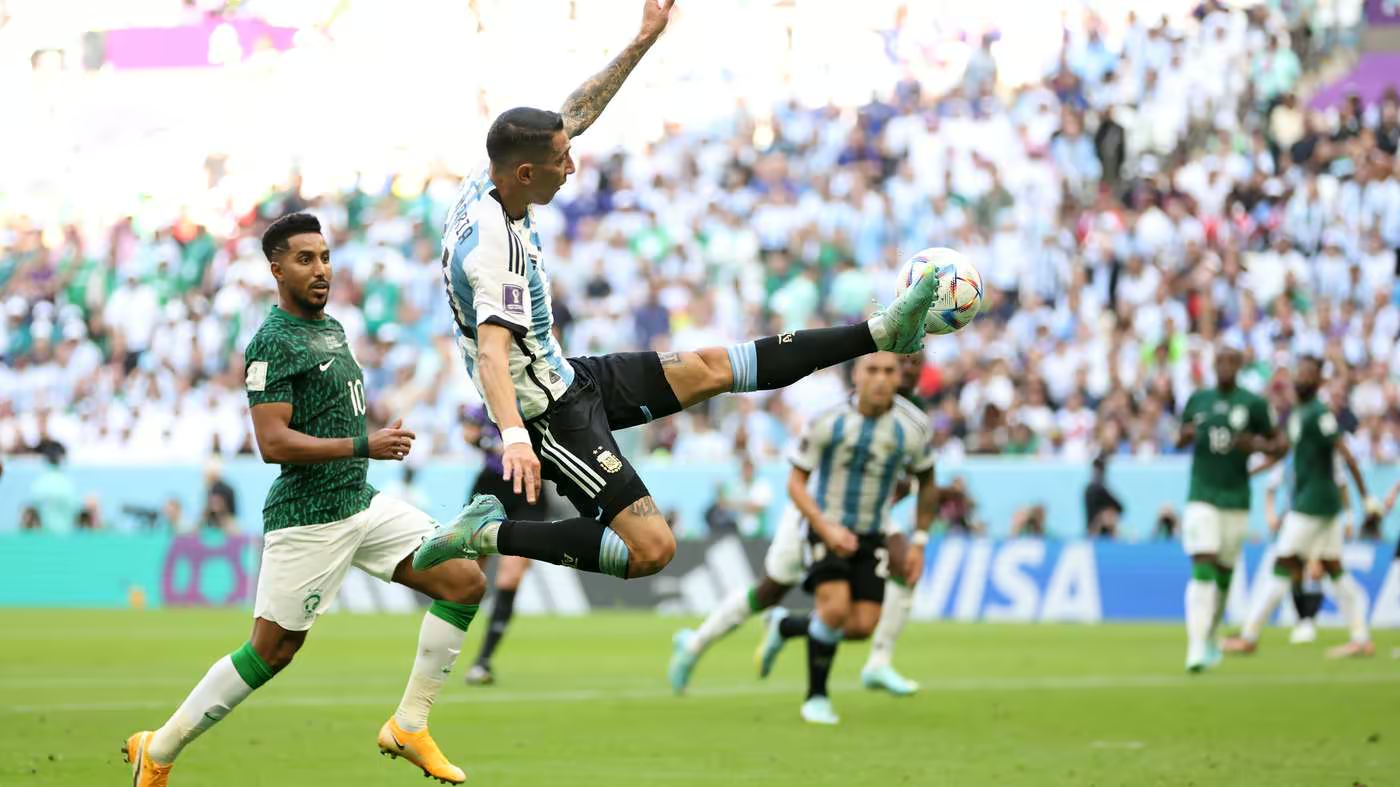
In the Qatar 2022 edition, Argentina faced another test. Under Hervé Renard, Saudi Arabia stunned Lionel Messi and his teammates with a 2-1 victory. That result fueled doubts about Argentina's chances of lifting the title or even progressing, echoing memories of 2002. Yet Argentina rallied, eliminated opponents one by one, and reached the final, where they defeated France on penalties in one of the most dramatic finales in World Cup history.
So as the 2026 draw approaches, history reminds us that destiny and controversy walk hand in hand—especially when a team aims for the final with a few well-timed shots on goal. Punchline time: If the draw were a sniper range, Saudi would be hitting bullseyes—just remember to breathe and don't blink. Another shot: the best substitutions often arrive when the plan looks shaky, because timing is everything in football and in a good joke.