Spain Plays Football in a Different Universe: Depth That Outshines Absences
15 October 2025

Spain’s Depth Defines a New Golden Era
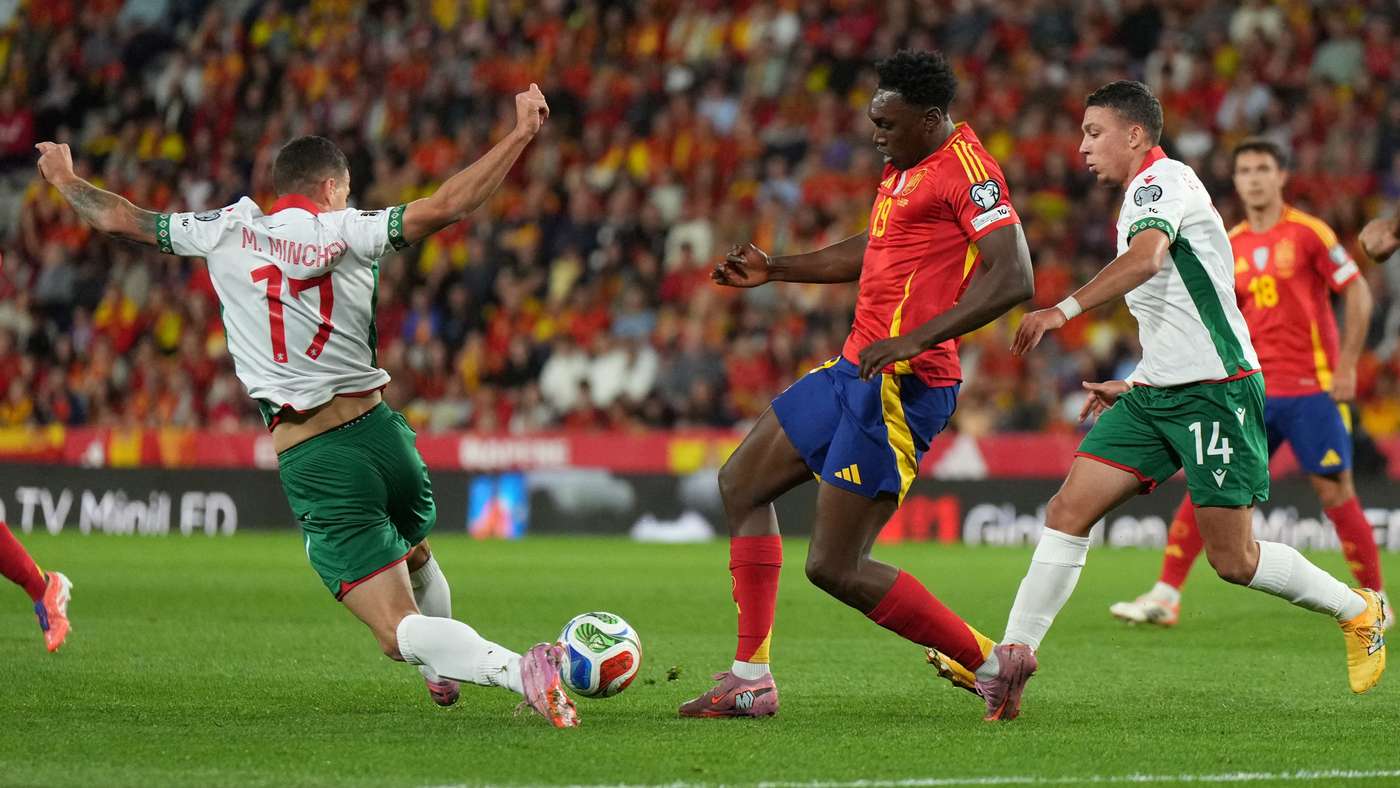
Georgia coach Willy Sagnol captured a sentiment echoed by many national-team bosses when he said that Spain doesn’t just play in another world—they play in a completely different universe. The Frenchman, who has won the European Cup with Bayern Munich and finished as a World Cup runner-up in 2006, spoke after watching Spain’s third-choice side threaten eight or nine goals against Georgia, only to later crush Bulgaria 4-0 and equal a historic unbeaten run of 29 official matches.
According to ESPN, the figure mirrors the golden generation Spain produced under Iker Casillas, Xavi, Iniesta, Busquets, Puyol, Alba, Ramos, Villa and Torres. The network even asked whether we are witnessing a new, perhaps brighter, era in Spanish football. The current “La Roja” under Luis de la Fuente continues to win and entertain, even with the most influential stars out of the lineup.
In qualifying for the World Cup, Spain has faced a reality where hypothetically a full XI could be composed entirely of players who were unavailable for the last matches. Goalkeepers: David De Gea, Unai Simon; Defenders: Dani Carvajal, Nacho, Pau Torres, Jose Gimenez, Pedri; Midfield: Rodri, Fabian Ruiz, Marc Roca, Gavi, Ferran Torres, Isco; Forwards: Lamine Yamal, Morata, Joselu, Buar Perez, Nico Williams. The idea that such a squad, if assembled, could win any tournament underscores the depth available to the national team—and yet the rest of the squad remains among the world's best, even when missing a wave of stars for various reasons.
Spain’s dominance extends beyond the starting XI. In the latest coastal qualifier, goalkeeper Giorgi Mamardashvili of Georgia saved a potential nine-goal thrashing, a reminder that even as opponents bunker down, Spain’s precision and pace make breakthroughs painfully easy to concede against—until the “La Roja” turn on the afterburners.
When asked about the secret behind such dominance and the squad’s inexhaustible depth, Sagnol recalled watching Spain in past eras—the 1980s and 1990s—where they played brilliantly but did not always win titles. He attributed the current success to a long-term, well-executed plan: a systematic, two-decade effort by the Spanish Football Federation. He singled out Pedri as a symbol of the balance between lightweight physique and extraordinary intelligence: a player so small in frame that a wind gust might carry him away—yet so impactful because every touch serves the collective goal.
As Sagnol put it, Spain produces players with exceptional football IQ. Even when several stars are missing, the substitutes enter with the same style and the same level of execution. In the past four years alone, Spain reached the Euro 2021 semi-finals, earned Olympic silver in Tokyo 2021, finished as runners-up in the Nations League 2021, reached the World Cup 2022 knockout stage, won the Nations League in 2023, captured Euro 2024, won Olympic gold in 2024, and reached the Nations League final in 2025. If this were a horse race, its value would be through the roof—moving from third to second to ninth to first in consecutive showings.
During this period, De la Fuente has used more than 63 players—many not expected to thrive at the international level—yet they became foundational members of the squad. Leeds United forward Ilia Gruev, after Spain’s 4-0 win over Bulgaria, said, “Facing Spain is incredibly difficult; you can’t even engage in duels as they move the ball at a lightning pace. They are the smartest players in the world. Everything they do is simple and smart, and that is the best possible approach. When you defend against them, you defend all game; when you win the ball, you are completely exhausted.” He added, “Watching Spain is a pleasure. It looks easy, but it is exceptionally hard.”
The success, of course, isn’t luck. It is a system. The federation begins scouting as early as 14–15 years old, selecting roughly 55 talents who are then shaped through disciplined tactical training and a strong emphasis on teamwork and responsibility. Former youth-coaching coordinator for the federation, Xenés Melindez, explained that from age 15 to 21, players are developed in the same way until the habits become automatic. The combination of innate talent and a rigorous system is what distinguishes Spanish football. When star players are unavailable, others rise to fill the void, and a season of substitutions continues to play out with identical intensity and intent.
In a touching moment of team spirit, Merino of Arsenal fame declared after scoring twice against Bulgaria, “We are family.” A couple of teammates—like Oyarzabal—shared the field and the scoreboard, lifting their compatriots while elevating the club-level relationship between players who have trained together since the national team’s youth ranks. Their collaboration helped Oyarzabal reach 13 goals under De la Fuente, including the winning strike in Euro 2024’s final, a reminder that the entire team contributes to the national success story. Sagnol’s closing remark—Spain and Portugal are the footballing models the rest of the world should study and imitate—sums up the mood: Spain’s true essence isn’t just talent; it’s a culture of excellence built across generations.
As the coach put it with a wry, almost wistful smile after watching all this, Spain’s “true Spain” made their older squads look tired but impressed. The current generation, he suggested, has learned to play “Spain real” football—the kind that fatigues opponents not with brute force but with calculated elegance.
Punchline 1: If depth were a goalkeeper, Spain wouldn’t just save goals—they’d keep rotating keepers like a late-night tapas menu. Punchline 2: Spain’s bench has more stars than a blockbuster awards night—and apparently, more scandalously good coffee between plays.