
Amanda Anisimova’s Historic Top-3 Rise Transforms US Tennis as Fritz Drops in the Rankings
5 January 2026
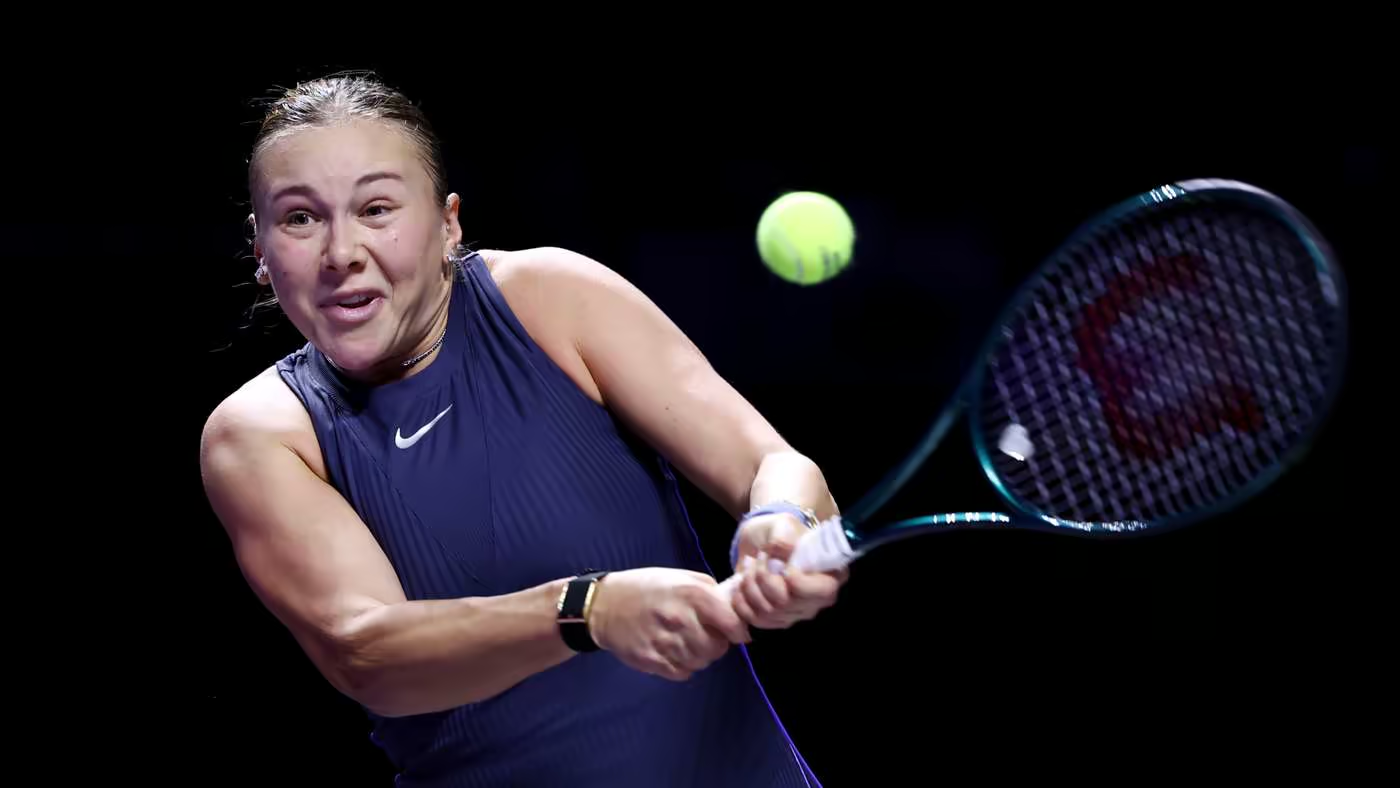
Women’s rankings shake-up
Despite no tournaments last week, the routine points reset delivered significant movement in the world rankings, highlighted by Amanda Anisimova’s historic rise. The update reflects the shifting balance of power among up‑and‑coming players and seasoned veterans.
Anisimova jumped from fourth to third, becoming the top U.S. player and overtaking Coco Gauff, who slid to fourth. Her surge drew attention as the calendar hints at a changing of the guard in American tennis.
Anisimova preserved her points (6,287) after exiting Auckland early last year, while Gauff’s lead from the U.S. Fed Cup victory was trimmed, dropping her total from 6,763 to 6,273. The spread shows how a year’s start can reshape the top ranks.
Anisimova is now the third player born in the 2000s to reach the WTA Top 3, and the fifth in tennis history (men’s and women’s) to do so. The 2000s cohort also includes Iga Swiatek, Carlos Alcaraz, Jannik Sinner, and Gauff. She joins a line of teenagers redefining elite success.
She becomes the 15th American woman to reach a Top 3 since rankings began in 1975, joining legends such as Chris Evert, Martina Navratilova, and the Williams sisters.
On the women’s side, other moves included Linda Noskova rising to No. 12, taking advantage of Clara Tauson’s drop to No. 14. Christina Bucsa joined the Top 50 for the first time at No. 50, while Anastasia Potapova fell to No. 55.
Punchline 1: Ranking moves happen fast—even a serve can qualify for “Next Generation.” Punchline 2: If this keeps up, my predictions will need a new calendar just to catch the calendar of these teens rising up the ladder.
Men’s rankings shake-up
In the men’s Top 10, Ben Shelton climbed to No. 8, Taylor Fritz fell from No. 6 to No. 9; Alex de Minaur moved up to No. 6, and Lorenzo Musetti reached No. 7, reclaiming U.S. front-runner status.
The changes mirror a highly competitive landscape where several players are ready to challenge the established order, and American players continue to push for greater consistency on the men’s side as well.
Overall, the update marks a new chapter for both tours, with a young generation stepping into the spotlight while veterans adapt to a shifting point system and renewed competition.
Punchline 1: If rankings were a tennis ball, these teens just served an ace and walked off with the trophy—no sweat, and the crowd still clapping. Punchline 2: The only thing sharper than their shots is how quickly the rankings move—blink and you’ll miss a new No. 3.