
Guardiola Takes the Blame: City’s 2-0 European Shock After a 10-Change Gamble
26 November 2025
What happened
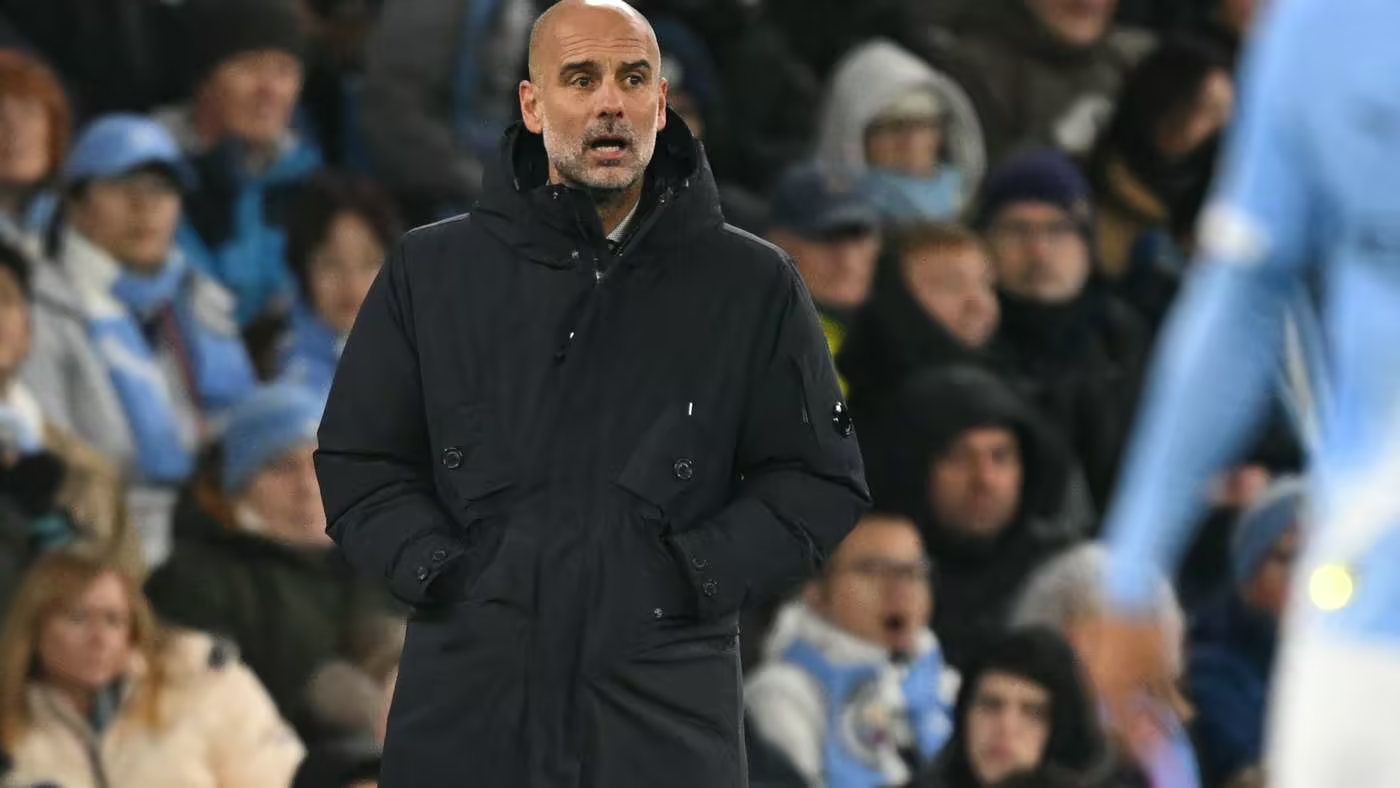
Spanish coach Pep Guardiola shouldered responsibility for Manchester City’s surprising 2-0 loss to Bayer Leverkusen in the Champions League after he opted for a bold rotation, making ten changes to the starting XI. The night also marked Guardiola’s 100th appearance in the competition, turning a milestone into a painful memory for City.
The setback came on a night when the Blaugrana—well, Leverkusen—pushed back a delayed arrival story and still left Manchester with a famous victory, leaving City fans in stunned silence as the final whistle blew.
According to BBC coverage, Leverkusen, who faced travel hiccups on the way to Manchester, headed home with three points and an stunned crowd, a result that erased most of City’s hope for the evening’s match-up.
City’s lineup had more substitutes than a coffee shop menu, and the mood grew heavier when City’s stars watched from the bench instead of sprinting onto the field to rescue the night.
Guardiola’s reflections
Guardiola told TNT Sport that he must “accept the criticisms.” He acknowledged that if City had won, the changes would have been overlooked, but with defeat, he conceded, perhaps, the rotation went a touch too far. He added that he always believes in the length of the season and giving everyone game time, yet he admitted perhaps he overdid it. Players had played to avoid mistakes rather than to execute the plan, and he accepted full responsibility, stating that a huge opportunity was wasted and that City must fight for the remaining fixtures.
Meanwhile, Leverkusen coach Kasper Ullmann (as quoted by BBC Sport) noted how the schedule is taxing for all clubs. He mentioned that the average number of changes in Champions League teams hovers around five to six players, but whatever lineup City fielded, they remain a high-quality side capable of pushing anyone on their night.
Impact on the match and the night’s narrative
Leverkusen’s travel hiccup briefly aside, their performance suggested the night would be unforgettable, with a late emphasis on City’s fragility rather than Leverkusen’s elegance. City’s absence of several key figures, plus the presence of a number of players from the youth ranks on the bench, left the team lacking the spark expected at a club of their stature.
On the field, the home side’s attack never clicked despite substitutions, and City were unable to leverage the depth Guardiola often relies on. When stars like Haaland, Foden, and others eventually entered the fray, they could not conjure the breakthrough City needed to change the course of the evening.
As City now turn the page to a daunting December 10 trip to Real Madrid, the need for a positive result has never been clearer. The balance between resting players and preserving results has become a talking point that City will need to navigate as the season progresses.
Guardiola’s closing assessment captured the sentiment: the team tried, but in a heavyweight club, you must impose your authority. The night’s frustrations were many, with shots saved and passes misplaced, and he emphasized that perhaps playing the core players who’ve carried the club recently might have offered more confidence. He also noted that the relentless schedule after the international break is a real test for any squad.
Ultimately, Guardiola became only the third manager to log 100-plus Champions League games for an English club, joining a pantheon of greats and turning a painful evening into a talking point about the pressures of modern football.
Former City midfielder Michael Brown spoke on Radio 5 Live, questioning the rationale behind such a heavy rotation: “You win first, then rotate; these changes gave Leverkusen a massive boost,” Brown argued. “It’s possible to rotate wisely, but the volume matters.”
Leverkusen’s night to remember was crowned by Alejandro Grimaldo’s thunderous strike and a Patrik Schick header, as the visitors celebrated with the kind of zeal that would have city rivals shaking their heads in disbelief.
Ullmann expressed pride in the character his team showed, calling the win a memorable moment that could propel their development. For City, a night of patience would be the recurring theme as they regroup for the challenges ahead.
Captain’s remarks from the Leverkusen camp reflected the sense of achievement: a night when the squad’s fight and personality—especially with several regulars missing—made the victory feel earned and meaningful.
Humor note: if you ever need a reminder that football can be a rollercoaster, tonight proves even the hexes of the transfer market can’t predict a substitution-heavy thriller. And if you’re Guardiola, a calendar full of fixtures means you’ll likely end up with more tactical notes than a librarian’s catalog.