
Joao Cancelo’s Saudi Chapter: The Player, The Problems, The Prize
20 November 2025
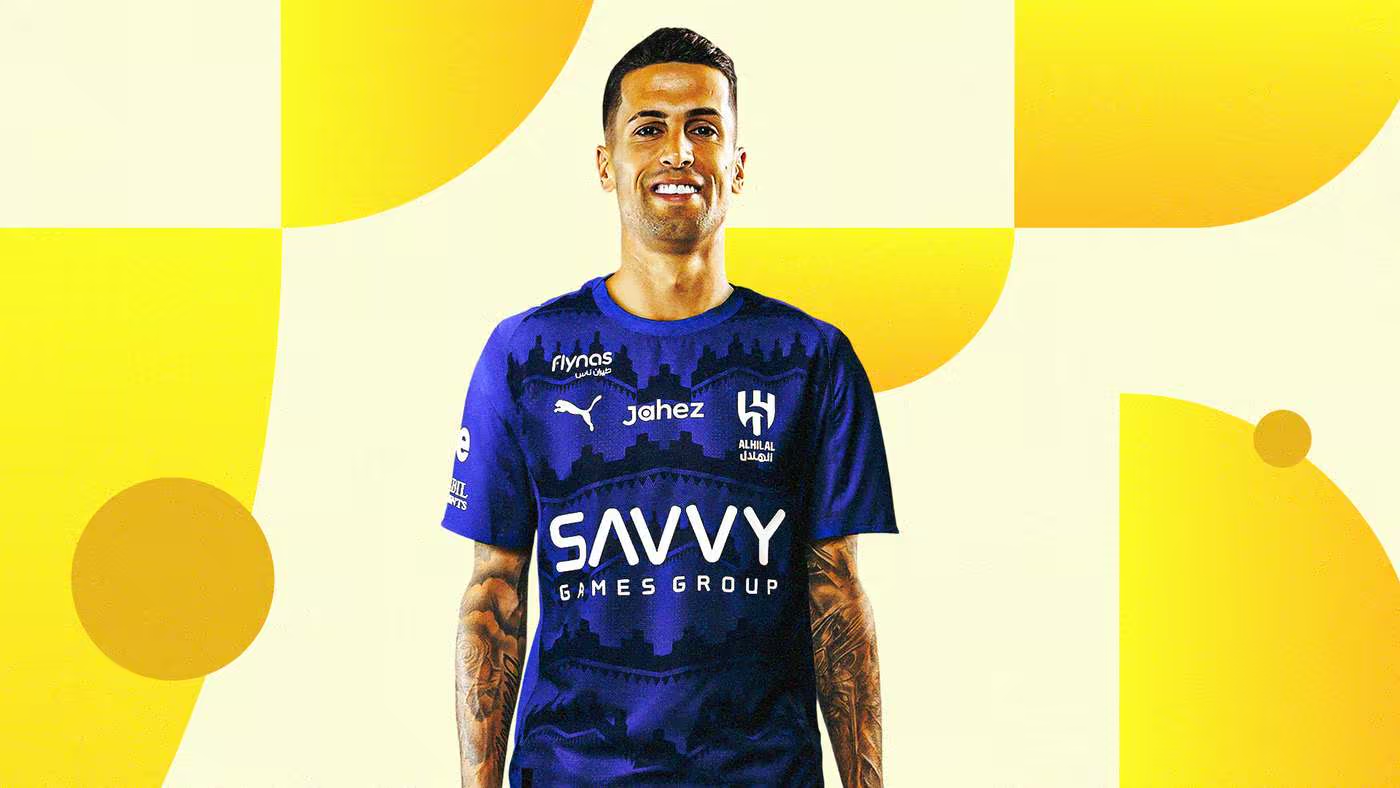
Saga Begins: A World‑Class Talent, A World of Questions
Joao Cancelo’s arrival at Al Hilal promised elite wide play and European experience, but a sequence of injuries, controversial public remarks, and inconsistent training routines quickly turned him into a focal point of debate. While his abilities remain undeniable, his tenure has raised questions about whether his presence helps or hurts the team’s balance in a demanding league and a high‑pressure environment.
Rumors of a desire to return to Europe—potentially with Benfica at the center of the chatter—have amplified concerns about his replacement at right‑back and the overall defensive structure. In a squad built to win now, the lack of a comparable European alternative at that position has become a strategic headache for the coaching staff.
On and Off the Pitch: A Double‑Edged Impact
Paradoxically, a silver lining emerged when Cancelo’s controversy led to Marcos Leonardo being registered to the squad, restoring a more reliable attacking balance after some selection bafflements. The Brazilian forward’s inclusion has strengthened the team’s offensive options in domestic and continental competitions, even as Cancelo’s form wobbles persist.
The player’s personal history has shadowed his professional trajectory. A life marked by tragedy at 18 and later mental‑health and neurological concerns has colored perceptions of his resilience, while a series of public disputes—ranging from a clash with Cristiano Ronaldo over a benching to fan skepticism after a teammate’s goal—have fed a perception of volatility rather than consistency.
From City to Riyadh: A Turbulent Transfer’s Aftermath
Since moving to Saudi Arabia in 2024 for a reported 25 million euros, Cancelo has found a different kind of pressure. Public frictions with coaches Jorge Jesus and current strategist Simone Inzaghi (as cited in various reports) and a string of injury layoffs have kept him out of key clashes and disrupted selection plans, prompting questions about his long‑term fit within a team chasing domestic and regional supremacy.
Moments of social media drama—posting provocative messages about not being defeated, shortening stints at the club, and then briefly training with another Brazilian club—have understandably unsettled supporters who crave consistency. In the meantime, his absence has allowed younger or more disciplined players to step up, further shifting the balance of the squad’s priorities.
Closing note: When talent meets instability, teams often discover that parfois less is more. Cancelo’s case at Al Hilal suggests that even a player of his caliber can become more of a sting than a stingray sting, if the environment isn’t aligned to his strengths. In short, he’s a remarkable asset, but one that requires the right timing, temperament, and coaching to truly shine. And yes, the joke here is that even a world‑class full‑back can fail to full‑back the team’s morale—talk about a high‑maintenance wingback!