Liverpool's Silent Crisis: When Body Language Speaks Louder Than the Score
26 November 2025
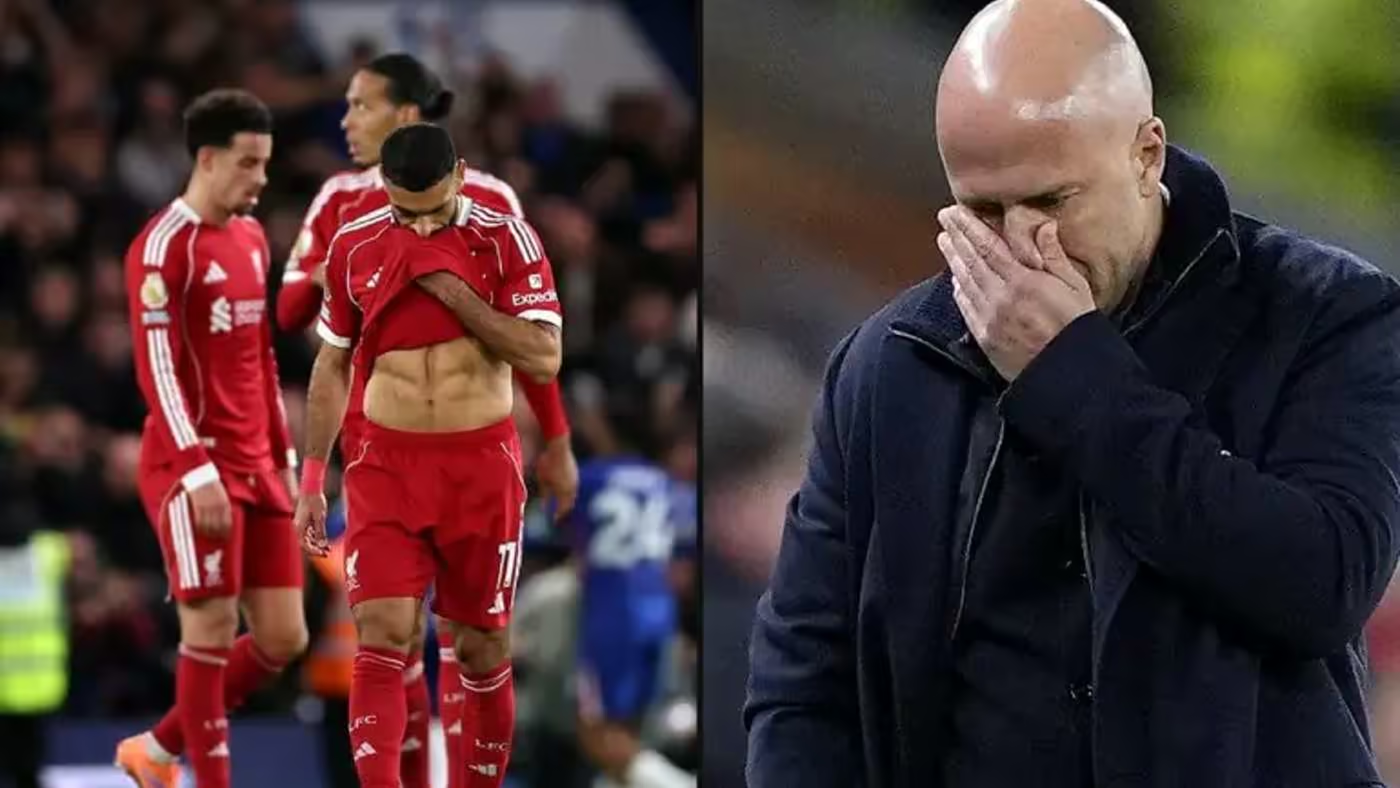
Liverpool's Growing Mental Crisis On Display
Images and clips from Liverpool's season so far reveal a deep psychological slump within the squad, a dramatic departure from the champion aura that defined Klopp's era. With a string of disappointing results and costly mistakes, the language of body movement has become a clear marker of the team’s fragility as players react to misfortune and pressure in real time.
On screen, Mohamed Salah no longer displays his familiar smile, Virgil van Dijk shows visible anger on the touchline, and Ibrahim Konate appears distressed after each substitution. These reactions, while not proof of a collapse, indicate a team wrestling with confidence as results slip away at crucial moments.
Even though wins against Aston Villa and Real Madrid earlier offered a glimmer of progress, defeats to Manchester City and Nottingham Forest have served as sobering reminders that the rebuilding remains incomplete and the mood around the squad remains fragile as the season wears on.
Ahead of a Champions League clash with Eindhoven, The Athletic outlined 11 issues the team must fix to regain momentum, yet new problems have already emerged and the sense of urgency has grown among players, coaches, and supporters alike.
This season the club has lost six matches in which the first goal is conceded, a troubling trend that contrasts with some of last season’s fightbacks when late goals kept ambition alive and confidence intact.
Under Klopp the team carried the label of mental monsters, a reputation that Arne Slot helped revive in his early days. This season points toward the opposite dynamic, as observers dissect how language and posture influence the Reds beyond tactical framing alone.
The Experts Weigh In On Body Language
Sports psychologists interviewed for the piece insist that body language is a symptom rather than the root cause of a downturn. The shock of a poor start can amplify visible reactions, magnifying emotions and shaping how teammates perceive one another in the heat of competition.
Moments of visible frustration — heads dipping, hands resting on hips, and players standing with arms folded — are interpreted by fans and pundits as signals of defeat. Yet the same cues can be misread, especially when expectations stay high and pressure piles on during demanding schedules.
The analysis cites conversations between veteran pundits and sports scientists who argue that body language can influence momentum even if it does not determine results. In that sense, expressive displays may reflect internal thoughts rather than create outcomes, though collective mood can sway performance in subtle ways.
While some critics target Salah and Van Dijk for perceived leadership gaps, others defend them, suggesting the team needs better structure, finishing quality, and a more cohesive game plan to translate mood into meaningful gains rather than mere optics on television.
Moments That Shaped the Season
The article recounts notable episodes that colored Liverpool's campaign, including Salah losing the ball and biting his lip in frustration, Van Dijk showing palpable dismay after a defensive lapse, and Konate displaying distress after a late substitution. These scenes are presented as touchstones of a season in transit, not isolated incidents.
The discussion also touches on reactions during set pieces and transitions, where organizational gaps and miscommunications have allowed opponents to seize moments. Psychologists cited emphasize that while visual cues matter, the underlying tactical execution and collective confidence ultimately decide outcomes rather than individual gestures alone.
Inbal Honigman and a panel of analysts are highlighted for detailing how the Reds exhibit different body language patterns when winning versus losing. Their work underscores that confidence tends to show in posture and gaze, while anxiety can manifest as a reluctance to connect with teammates or a tendency to retreat from aggressive pressing.
Ultimately the piece argues that body language, while noteworthy, is not a stand-alone predictor of success or failure. It can indicate the state of mind but must be read in concert with structure, technique, and the quality of finishing in a given match.
Supporters and observers will continue to watch closely as the Reds seek a turning point that reconnects their mood with their capabilities. If the team can align belief with execution, a more confident facial expression and a sharper collective rhythm could accompany a return to form.
Punchline: If body language could win titles, Liverpool would already be lifting trophies with a grin. Punchline two: Maybe the real offense is the defense of the joke about their mood crawling back from the depth charts — the slapstick that almost writes itself when the game is tight and the bench is restless.