
Argentina's Heartbeat: From World Cup Heartbreak to 2026 Rally and Beyond
17 February 2026
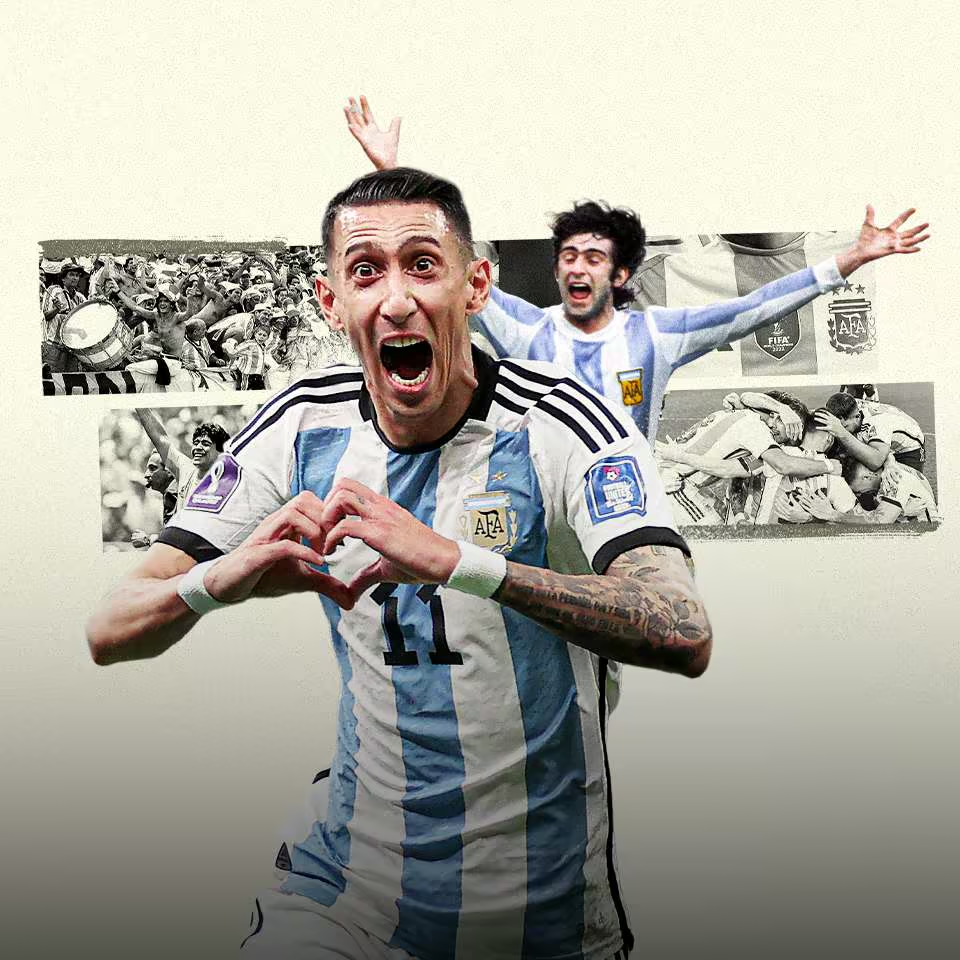
Passion as the Banner
In 2022, Argentina finally crowned champions, turning a century of heartbreak into a national anthem of belief. They did not merely win; they transformed the pitch into a stage where football is a culture, a way of life, and a shared dream. The world watched as a country that had tasted defeat after defeat learned to feast on hope, one goal at a time.
From the losses in the finals of 2014, 2015, and 2016 to the triumph in Qatar 2022, the team forged an identity that goes beyond trophies. They play with a heartbeat, not just with feet. The Argentines don’t merely participate; they feel the match in their bones and chant it into existence.
The leadership came from Lionel Messi, but the real shift happened within the locker room: a stubborn belief that this time, heartbreak would become a beacon. The fans answered with songs that carried the team through every test, across deserts and through oceans of reporters and roars.
No spectator could miss the energy in the stands: the blue and white floods, the drums that echoed across time zones, the chants that crossed the Atlantic. The World Cup felt less like a tournament and more like a national ritual in which every voice mattered.
Legacy Forged in Fire
Argentina’s football saga is a ledger of glory and wounds. Since the first World Cup in 1930, the Albiceleste have fought with a blend of artistry and grit; 1978 and 1986 lit a ceremonial fire that burned through generations. After Maradona, the scars remained: defeats against Italy, the United States, and Germany; near-misses in finals and knockout rounds. Yet the pain never broke the national spirit; it tempered it into something sharper, something that could dream and fight at the same time.
That furnace produced a team that did not surrender to drama but learned to dance with it. The 2014-2016 chapters were painful, even brutal. Critics questioned the will to win; fans feared a curse. Yet that very crucible shaped a unity that would flower years later, transforming longing into resolve and turning sorrow into a compelling purpose.
That chapter highlighted a simple truth: football is a shared experience. In Qatar, the blue and white colors turned stadiums into open rooms of Buenos Aires; songs rose from streets, trains, and markets and carried to the desert. The flame of passion traveled with them, farther than anyone predicted.
From Fear to Fate
The 2022 campaign began with a jolt: a defeat to Saudi Arabia that stunned the world. Rather than crumble, the team pivoted, choosing to burn brighter. The knockout path—through Mexico, a dramatic Netherlands encounter, and a final against France—was a symphony of risk and redemption. The squad grew into something larger than its star, becoming a collective destiny tuned to a common dream.
When Messi finally lifted the World Cup, it felt like more than a prize. It completed a national narrative: a journey from doubt to global legend. The captain’s leadership and the unity around him transformed Messi from a genius into a symbol—someone who could shoulder a country and still smile at the end of nightfall.
The victory did more than seal a title; it connected the modern era with the enduring legacy of Maradona, two icons separated by decades but bound by the same dream. The Albiceleste’s arc became a map of perseverance guiding the team into future chapters, a reminder that pain can be forged into purpose and pride.
Football is a shared experience, and the fans proved it. In Qatar, the blue and white sang as one, turning arenas into outdoor rooms of memory and hope. The flame traveled with them across oceans, a living symbol of identity and belonging that refuses to fade.
Home in the Americas: Messi and the Leash
The 2026 World Cup will unfold across North America, giving Argentina a fresh stage and a familiar heartbeat. Messi is more than a player; he is a global emblem who now helps carry the national story into the United States, where the game grows and fans cling to the dream. Inter Miami’s rising profile has become a symbolic embassy for Argentina, as blue and white apparel fills arenas from Miami to New York and Los Angeles.
The story is bigger than a single man or club. It is a century-long saga of a nation that forged its identity through football—an art of pain, joy, and shared memory. Every generation has left its mark, from 1978 to 1986 to 2014 and 2022, and together they form a chorus that refuses to fade.
As the 2026 journey approaches, the Argentina that plays in North America will carry not just a title but a living philosophy: passion is a way of life, not a rumor in a stadium. The world will see again how a country translates emotion into triumph and how a team that wanted it most finally owns the moment.
When the national anthem rises again in the United States next decade, it will be more than a celebration of sport. It will be the sound of a nation telling the world that belief, shared by millions, can shape history. And if you measure pride by the number of songs left in your throat after midnight, Argentina has just written an epic in the sands of Qatar and carved a map for years to come.
To end with a wink: if passion were a currency, Argentina would be the richest bank in the world, with interest paid in blue and white scarves and a few extra sleepless nights. And if luck ever retires, the fans will lend it some rhythm and keep the party going. A note for the record: the sharpest weapon here is not a boot but a punchline, so here are two sniper-style jabs to close with a grin: first, their defense will block your doubts like a wall of cappuccinos; second, their optimism is so strong it could lift a stadium roof while singing Muchachos at the same time.