
Der Klassiker Unveiled: How Bayern vs Dortmund Became Football’s Global Showdown
16 October 2025
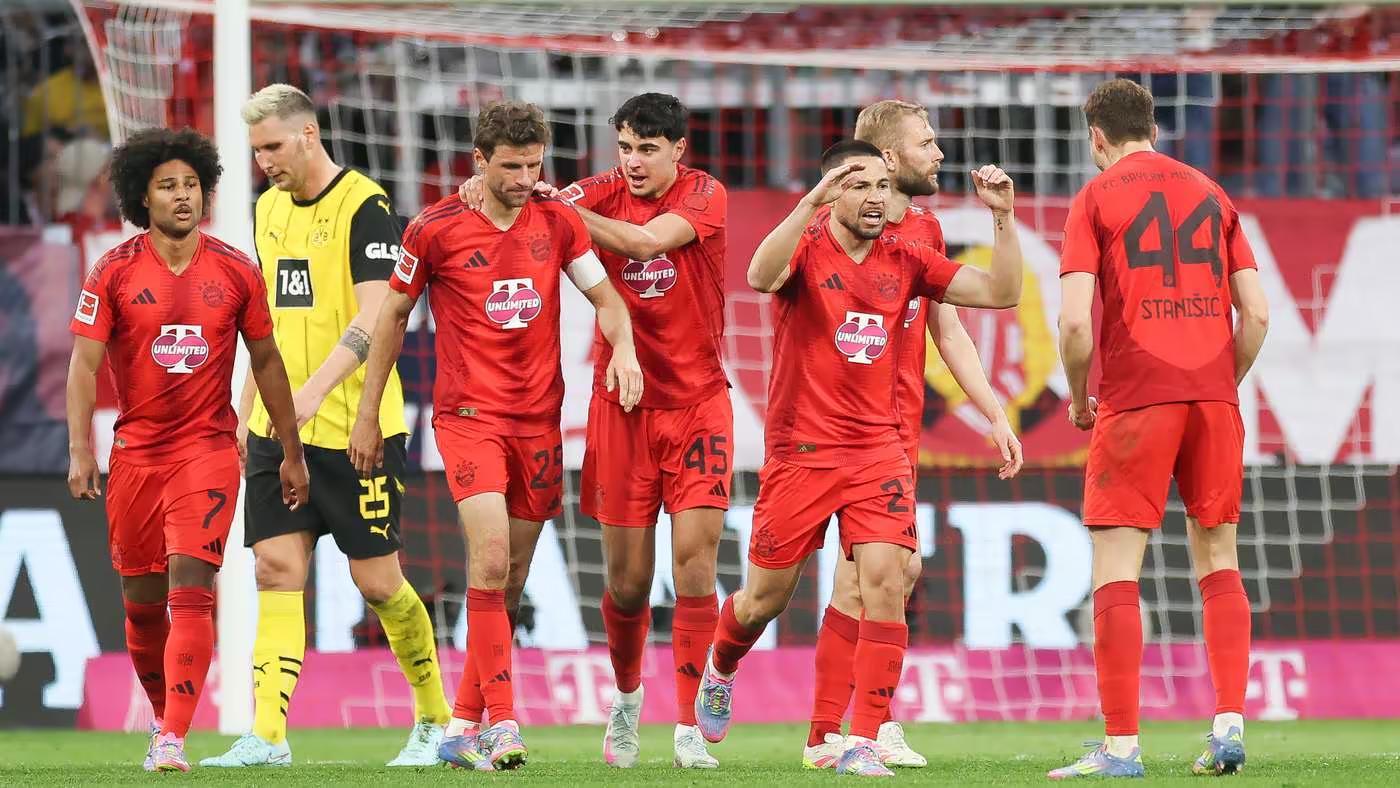
Fans around the world are gearing up for the Der Klassiker, the famed clash between Bayern Munich and Borussia Dortmund, now one of football’s most watched showdowns. The match is set at the Allianz Arena on Saturday, as Bayern host Dortmund in the seventh round of the Bundesliga, with Bayern sitting on 18 points and four clear of their rivals in second place. The spectacle isn’t just about three points; it’s about a rivalry that has evolved into a global phenomenon, blending tactical chess with emotional theatre.
Origins and the rise of a brutally simple rivalry
Unlike many of football’s epic rivalries rooted in politics or geography, Der Klassiker began as a straight football contest between two local powers and grew into a worldwide narrative. It crystallized around two clubs that pushed each other to extremes, with Bayern’s historical edge at times meeting Dortmund’s audacious advances. In the early chapters, the arena was dominated by the Bavarians—an imbalance that fed the fire and gave the rivalry its unmistakable bite.
From the 1963 founding of the Bundesliga, Bayern dominated, and Dortmund endured fluctuations that kept fans guessing. Bayern’s most lopsided win in those early days was an 11-1 horror show that etched itself into the folklore. Through the late 60s, 70s, and into the 80s, Bayern held a significant lead—11 victories to Dortmund’s 6 across 21 meetings—before the pendulum began to swing back in Dortmund’s favor as the era progressed and new talents emerged.
Emergence, endurance, and a global peak under Klopp
The 1980s offered a more balanced canvas, with Bayern securing seven wins, Dortmund four, and nine draws painting a more competitive picture. The 1990s then marks a turning point: Dortmund’s ascent under Ottmar Hitzfeld in the early 1990s produced a new, more evenly matched rivalry. Dortmund claimed Bundesliga titles in 1995 and 1996, while Bayern’s supremacy was not as unassailable as before. The 1997 European triumph over Juventus—secured on German soil—was a symbolic moment that underscored Dortmund’s growing European credibility. The late 1990s featured memorable clashes, including a dramatic quarterfinal in the 1998 Champions League that underscored the rising intensity between the two German giants.
Financial turbulence hit Dortmund in the new century, triggering a period of upheaval that forced the club to seek support and restructure. Bayern, meanwhile, continued to harvest domestic trophies, including a string of league titles that kept the rivalry firmly in the spotlight even when Dortmund faced off-field challenges, such as wage adjustments and strategic recalibrations.
Then came the Klopp era, a phase that propelled the derby to a global stage. Jurgen Klopp’s Dortmund built a thrilling team with standout signings like Lewandowski and Kagawa, turning Dortmund into a relentless challenger that not only toppled Bayern at home but also left an imprint on European football. Between 2010 and 2012, Dortmund surged to the top, delivering a historic double in 2011-2012 and boasting a fierce head-to-head record against Bayern as the two clubs traded titles and blows across competitions. The 2012 league and cup double highlighted Dortmund’s ascent, while the 2013 Champions League final at Wembley—pitting the two German giants against each other—put this rivalry on the world stage, with Bayern sealing a 2-1 win thanks to late heroics from Arjen Robben and cementing a domestic-European double that few could have imagined a decade earlier.
The post-2013 era has seen Bayern maintain domestic dominance, fuelled by a relentless pursuit of league titles and continued high-stakes meetings with Dortmund in cups and league play. The rivalry has become a benchmark for excellence in German football, with head-to-head fixtures often carrying European implications and a palpable sense that the game can swing the course of a season. Parallel stories—the financial resilience of Dortmund, the strategic genius of Bayern, and the ongoing tug-of-war for German supremacy—remain vibrant threads in this evolving tapestry.
Final thought: while Der Klassiker has transformed into a global event, its essence remains a fierce, purely athletic contest—the European cousin of the old “local derby.” And if you’re worried about the score, relax: the scoreboard has a knack for writing its own punchlines, no matter who’s leading. Punchline time: If football were a sniper, this derby would be a perfect headshot of drama every season. And another one: timing is everything—these two teams deliver punchlines with every kickoff, leaving the rest of us scrolling for the next episode of the saga.